
Fertility diets for women: Boosting fertility naturally
Can what you eat really affect your ability to get pregnant? It’s a question more and more people are asking—and the short answer is yes, it can make a difference.
While food can’t solve every fertility challenge, the right nutrition and lifestyle choices are key to boosting fertility naturally.
Research shows that specific fertility diets for women can play an important role in supporting hormonal balance, ovulation, and overall reproductive health.
What to consider and what to eat when you want to get pregnant
1-Being underweight or overweight can make conception more difficult
2-Taking folic acid has well-established benefits for fertility
3-Following a plant-based diet (less animal protein) helps support fertility
4-Eating complex carbs rich in fiber can improve fertility.
So, what is the best fertility diet plan?
Large studies following thousands of women over time have identified common patterns in fertility-friendly diets. These approaches tend to emphasize high-quality sources of fats, proteins, and carbohydrates, along with key vitamins and minerals that support reproductive health.
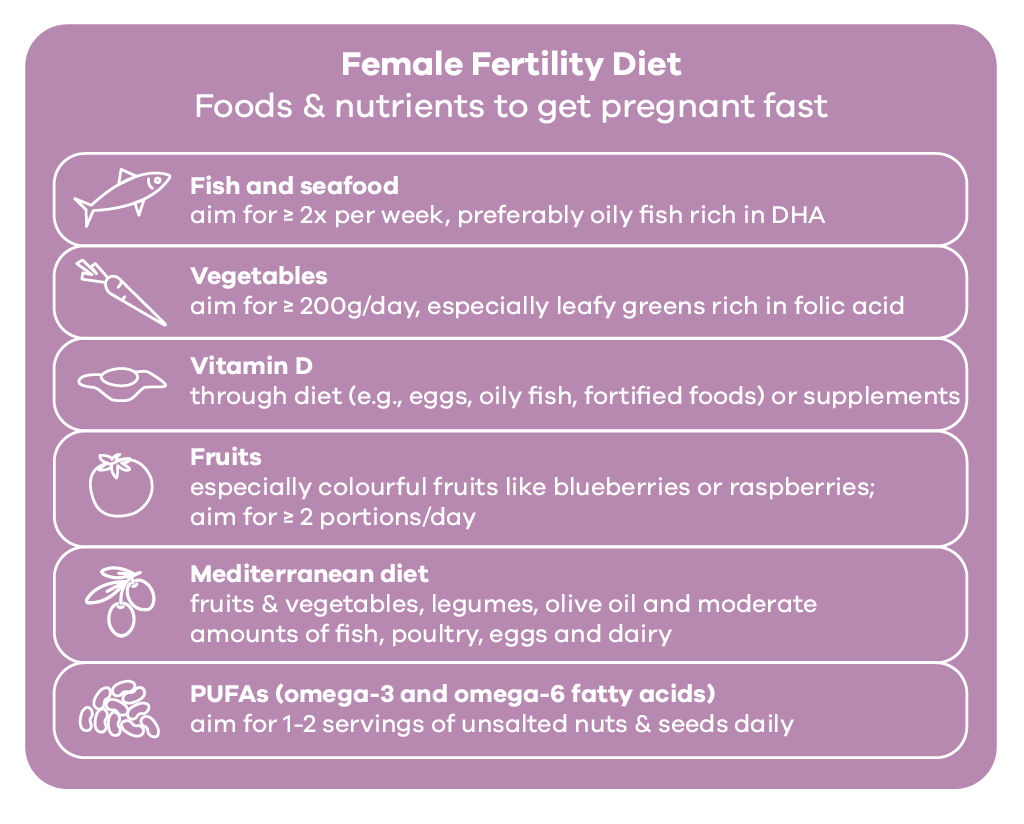
The best fertility diet plan focuses on healthy foods and fats, similar to a Mediterranean diet, while limiting processed items, trans fats, and excess sugar.
Following a fertility diet plan rich in fruits, vegetables, whole grains, protein, and PUFAs—together with staying active—is exactly what experts recommend for women hoping to conceive.
Fertility diets for women: Foods to boost fertility
Just as some foods can make it harder for your body to conceive, others can support fertility and prepare your body for pregnancy. Below are key foods and nutrients that may help boost fertility when you are trying to get pregnant.
Foods to eat to get pregnant fast
PUFAs – the “good fats” your body loves
Polyunsaturated fatty acids (PUFAs)—especially omega-3 fatty acids (such as DHA and EPA) and omega-6s (such as arachidonic acid)—play an important role in fertility for both women and men. PUFAs support healthy ovulation, sperm quality, and early embryo development.
In women, a higher intake of omega-3 polyunsaturated fatty acids may support fertility. Increased nuts and seeds consumption (omega-6 fatty acids) may improve male fertility.
Fertility diets for women: Foods to avoid to get pregnant
Just as some foods can support fertility, others can make it harder for your body to conceive. Below are common foods and drinks to avoid when trying to get pregnant.
Foods that decrease fertility
Saturated and trans fats to limit when trying to conceive
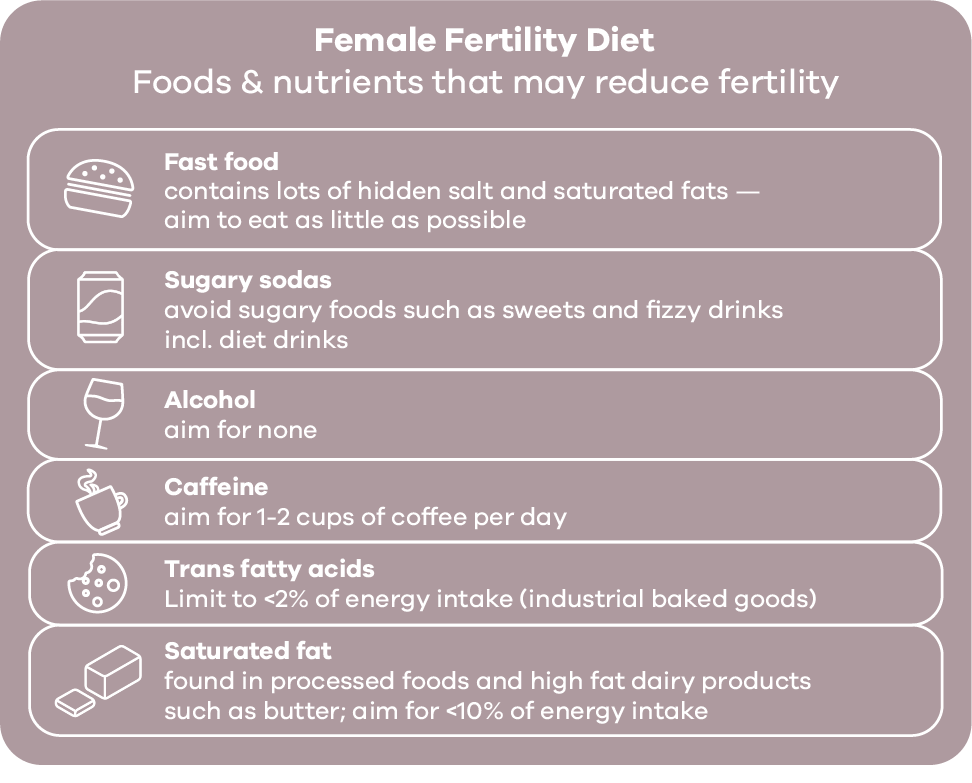
Trans fats and high amounts of saturated fats in particular can negatively affect hormone balance and ovulation.
Saturated fats: found in high-calorie animal products like butter, fatty meats, sausages, cheese and processed pastries. These fats can raise “bad” cholesterol and may interfere with hormone balance when consumed in excess.
Trans fats (also called trans-fatty acids): found in fried foods (incl. French fries), and commercial baked goods such as cakes, cookies and pies. Trans fats may reduce fertility in both women and men.
Trying to conceive? Learn how a healthy preconception diet can support fertility and prepare your body for pregnancy.
Want a complete, structured guide to support yours and your partner’s fertility — without hopping between articles?


