
Pregnancy supplements & pregnancy vitamins: What you need to know
Pregnancy is a pretty incredible job for your body. You’re not only supporting yourself—you’re also growing a placenta, increasing your blood supply and providing everything your baby needs to grow and develop. That’s why the requirements for some nutrients increase during pregnancy.
Find out which nutrients deserve particular attention—and why pregnancy supplements and pregnancy vitamins can help.
Supplements pregnancy: How to meet your nutritional needs during pregnancy
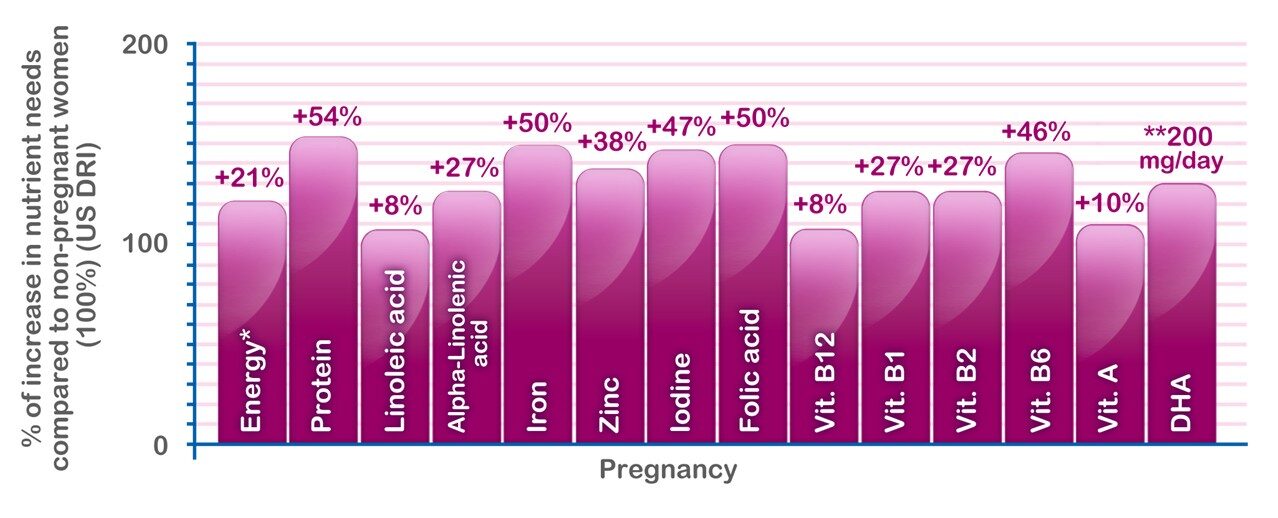
Pregnant women have unique nutritional needs, especially for certain micronutrients, which can increase by up to 50%. During pregnancy, your requirements for nutrients such as protein, iron, folic acid, iodine, and zinc rise significantly to support your baby’s growth and development.
Supplementation during pregnancy: Why it matters
A healthy, varied diet is the foundation of a healthy pregnancy. Protein, essential fatty acids, vitamins and minerals from foods provide most of the nutrients you and your baby need.
But pregnancy changes the game. Your body needs more of certain nutrients, and getting enough from food alone isn’t always easy. This can be especially true if you have a restricted or unbalanced diet, eat little or no animal foods, or already have low nutrient levels when you become pregnant.
That’s why supplementation during pregnancy can be a useful safety net—helping to fill potential nutrient gaps when your diet doesn’t quite provide enough.
What supplements to take during pregnancy💊
Protein needs pregnancy
Protein is made up of amino acids—the building blocks your body uses to grow, repair and maintain tissues. During pregnancy, your protein needs increase by >50% as your baby grows and your body builds new tissues to support the pregnancy.
Good sources of protein include meat, fish, eggs and dairy products, as well as plant-based sources such as beans, lentils, peas, nuts, seeds and whole grains.
When might a pregnancy supplement help?
A healthy diet can usually provide enough protein. However, getting enough protein can be more challenging if you eat few or no animal-based foods or have difficulty meeting your increased needs through food alone. In these cases, a high-quality protein supplement may help fill the gap.
Omega 3 supplements during pregnancy
DHA (docosahexaenoic acid) contributes to your baby’s brain and visual development. It is an essential part of the diet because our body cannot produce sufficient DHA from its precursor, alpha-linolenic acid (ALA).
Foods rich in DHA include egg yolk, some types of fish and fish oils. If you eat little or no fish, getting enough DHA can be more challenging.
When might a pregnancy supplement help?
Pregnancy can increase your need for DHA, while the diet may not always provide enough. The EFSA (European Food Safety Authority) recommends an additional 100–200 mg of DHA per day during pregnancy. If you eat little or no fish, a DHA supplement can therefore be particularly useful.
Pregnancy vitamins and minerals
Pregnancy increases the body’s need for a number of essential vitamins and minerals. While a healthy and varied diet provides many of these nutrients, adequate intake can be particularly challenging for pregnant women.
The micronutrients for which adequate intake is especially important during pregnancy include folic acid, iron, vitamin D, zinc and iodine.
Folic acid for pregnancy
Folic acid is one of the most critical micronutrients during pregnancy, especially during the very early period of pregnancy.
Folic acid has several important functions, but one of the most crucial is its role in the development of your baby’s spinal cord. This development starts very early—often before you even know you’re pregnant.
Getting enough folic acid before conception and during the first weeks of pregnancy is therefore especially important. Good dietary sources of folate include leafy green vegetables, beans and other legumes, asparagus, broccoli, avocado and citrus fruits.
When might a pregnancy supplement help?
Even a healthy diet may not provide enough folic acid at the critical stage before and during early pregnancy. The WHO (World Health Organization) recommends 400 µg of folic acid per day before and during pregnancy.
Folic acid supplementation can reduce the risk of neural tube defects by around 70%!
Iron supplements for pregnancy
Iron deficiency is the most common and widespread nutritional disorder in the world and is the most common cause of anaemia during pregnancy. Anaemia occurs in about 42% of pregnant women globally.
Iron is essential for cell division and normal blood function, particularly oxygen transport. It also plays an important role in energy metabolism and immune function.
Good sources include meat and meat products, from which iron is absorbed particularly well. Plant sources like beans, lentils, peas and other legumes also contain iron, although absorption can be lower. If you eat mainly plant-based foods, combining iron-rich foods with vitamin C can help your body absorb more of the plant-based iron.
When might a pregnancy supplement help?
During pregnancy, your blood volume increases substantially, while your growing baby also needs iron to support growth and development.
Food alone does often not provide enough iron to meet the increased needs of pregnancy. If your iron levels are low or you are at increased risk of deficiency, your healthcare professional may recommend an iron supplement.
Iron supplementation can help prevent or treat iron-deficiency anaemia and support healthy birth outcomes.
Zinc for pregnancy
It is estimated that more than 80% of pregnant women worldwide have inadequate zinc intake, primarily because of insufficient consumption of zinc-rich foods.
Zinc is essential for cell division, normal growth and development, protein synthesis and a healthy immune system.
Good food sources include foods of animal origin such as meat, fish and dairy products, as well as whole-grain cereals, nuts, seeds and legumes.
When might a pregnancy supplement help?
Zinc deficiency during pregnancy is associated with an increased risk of preterm birth, maternal bleeding after delivery, fetal growth restriction and low birth weight.
Zinc supplementation during pregnancy can benefit both mother and baby. It has been shown to reduce the risk of premature birth in women and may help decrease infectious diseases in infants and children.
Iodine for pregnant women
About 28% of the world’s population is estimated to be iodine deficient. Pregnant women are at increased risk of iodine deficiency because iodine needs increase during pregnancy.
Iodine is essential for the production of thyroid hormones, which play a crucial role in growth and development, particularly the development of your baby’s brain.
Good dietary sources of iodine include iodised salt, dairy products, fish and seafood and eggs.
When might a pregnancy supplement help?
Iodine supplementation is recommended by the WHO in areas where iodine deficiency is common and access to iodised salt is poor. When given during the first trimester of pregnancy, iodine supplementation can significantly reduce the risk of irreversible mental impairment in infants.
Vitamin D supplementation pregnancy
Vitamin D plays an important role in developing healthy bones and supporting normal body functions during pregnancy.
Vitamin D is found in foods such as fatty fish, fish liver oils, eggs, and red meat. Plant-based foods are generally not a good source of vitamin D. Our body can also produce vitamin D when the skin is exposed to sufficient sunlight.
When might a pregnancy supplement help?
Vitamin D deficiency is common among pregnant women worldwide, with reported rates ranging from 30 % in the USA, to 55% in Europe, 70 % in China and 96% in India.
If your diet and sunlight exposure don’t provide enough vitamin D, supplementation can help you meet your needs. Your healthcare professional can advise whether you need additional vitamin D.
Best prenatal vitamins for pregnancy
Pregnancy is a time when your nutrient needs increase significantly. A healthy, varied and nutrient-rich diet is the foundation—but sometimes, food alone may not be enough to cover all your increased needs. This is where a well-formulated pregnancy supplement can help.
The right supplementation can help close nutritional gaps and support both you and your growing baby during this important time. Evidence suggests that pregnancy supplements containing essential vitamins and minerals can support healthy pregnancy outcomes.
When choosing the best prenatal vitamins for pregnancy, it is usually more practical to look for a well-dosed supplement that combines key vitamins and minerals in one formula, rather than taking multiple individual supplements. This can help fill nutritional gaps without turning your daily routine into a handful of different pills.
References
Araújo D, Carrillo B, Sampaio B. The Long-Run Economic Consequences of Iodine Supplementation. J Health Econ. 2021 Sep;79:102490. doi:10.1016/j.jhealeco.2021.102490. PMID:34247127.
Mori R, Ota E, Middleton P, Tobe-Gai R, Mahomed K, Bhutta ZA. Zinc supplementation for improving pregnancy and infant outcome. Cochrane Database Syst Rev. 2012 Jul 11;(7):CD000230. doi: 10.1002/14651858.CD000230.pub4. Update in: Cochrane Database Syst Rev. 2015 Feb 02;(2):CD000230. doi: 10.1002/14651858.CD000230.pub5. PMID: 22786472.
Fekete K, Berti C, Trovato M, Lohner S, Dullemeijer C, Souverein OW, Cetin I, Decsi T. Effect of folate intake on health outcomes in pregnancy: a systematic review and meta-analysis on birth weight, placental weight and length of gestation. Nutr J. 2012 Sep 19;11:75. doi: 10.1186/1475-2891-11-75. PMID: 22992251; PMCID: PMC3499376.
Urrutia RP, Thorp JM. Vitamin D in pregnancy: current concepts. Curr Opin Obstet Gynecol. 2012 Mar;24(2):57-64. doi: 10.1097/GCO.0b013e3283505ab3. PMID: 22327734; PMCID: PMC3709246.
Berger J, Wieringa FT, Lacroux A, Dijkhuizen MA. Strategies to prevent iron deficiency and improve reproductive health. Nutr Rev. 2011 Nov;69 Suppl 1:S78-86. doi: 10.1111/j.1753-4887.2011.00436.x. PMID: 22043887.
Brenna JT, Lapillonne A. Background paper on fat and fatty acid requirements during pregnancy and lactation. Ann Nutr Metab. 2009;55(1-3):97-122. doi: 10.1159/000228998. Epub 2009 Sep 15. PMID: 19752538.


